Auto finance is an automated DeFi liquidity manager for hands-free LP yield strategies
Auto finance is an automated DeFi liquidity management service built around hands-free LP strategies. It monitors liquidity positions, applies strategy rules, and seeks yield opportunities across supported DeFi protocols so users do not have to adjust every pool position manually. The core idea is straightforward: deposit into a strategy, let the system manage liquidity placement, and track performance as market prices, fee income, and incentives change.
Automated LP management is the main job
Liquidity provision in DeFi sounds simple until prices begin moving. A position earns trading fees when it sits inside active markets, yet the same position loses efficiency when token prices move away from the chosen range or when another pool becomes more attractive. Auto finance focuses on that operational layer: keeping LP exposure aligned with a strategy instead of leaving every adjustment to the user.
The service is best understood as a portfolio tool for liquidity providers, not as a simple token swap interface. It deals with liquidity pools, AMM mechanics, yield sources, and position maintenance. The value comes from reducing the routine work that normally sits between a wallet deposit and a functioning LP position: choosing a strategy, placing liquidity, monitoring changes, and rebalancing when the strategy calls for it.
How the strategy layer handles DeFi liquidity
An LP strategy starts with a target market and a set of rules. Those rules define how capital is supplied, when a position is adjusted, and how the strategy treats earned fees or incentives. Auto finance packages that workflow into automated management, so the user is not forced to watch pool ranges, fee tiers, or reward changes throughout the day.
Behind the interface, the important concepts are standard DeFi building blocks. Liquidity pools pair two assets, automated market makers price trades through pool balances or concentrated ranges, and liquidity providers earn a share of activity in the pool. Automation does not remove those mechanics; it applies them through a repeatable strategy so the position stays active according to defined parameters.
Where yield comes from in managed LP positions
Yield in this context is not a single fixed rate. It comes from trading fees, protocol incentives, and the way liquidity is positioned relative to market activity. A high-volume pool pays more fees to active liquidity, while an incentive program adds token rewards on top of ordinary pool revenue. A managed strategy attempts to keep capital productive as these inputs change.
That distinction matters because LP yield is different from simple lending interest. Fee income rises when traders use the pool, and it falls when volume cools or liquidity sits outside the active trading zone. Incentive rewards also change as protocols update emissions, move budgets, or close campaigns. Auto finance is aimed at users who want that moving set of variables handled through automated rules rather than constant manual intervention.
What a new user checks before depositing
The first decision is the asset pair. A pool involving two volatile tokens behaves differently from a pool involving a volatile token and a stablecoin. The second decision is the strategy style: narrower liquidity placement seeks stronger fee capture when prices remain near the active area, while broader placement accepts lower concentration in exchange for fewer adjustments.
Before using Auto finance, a user should understand four practical items:
- The tokens required for the selected LP strategy.
- The wallet and network supported by the application.
- The expected source of yield, such as trading fees or rewards.
- The rebalancing logic used by the strategy.
- The withdrawal process and any transaction costs paid on-chain.
These checks keep the decision grounded in the actual pool design rather than the displayed yield alone. The strongest fit is a user who already wants LP exposure and prefers an automated manager to direct pool maintenance.
Self-custody and smart contract interaction
DeFi liquidity tools interact with wallets and smart contracts. A user connects a compatible wallet, approves the required token movement, and deposits assets into the selected strategy contract or vault structure. From that point, the application shows the managed position and the strategy performs its defined operations on-chain.
This workflow keeps the experience close to standard DeFi usage. Wallet approvals matter because they grant contract permissions over specific tokens. Transaction fees matter because deposits, withdrawals, and rebalances settle on a blockchain. Smart contract risk also remains part of the picture, since automated management relies on code executing correctly under changing market conditions.
Benefits for active liquidity providers
The clearest benefit is time saved. Manual LP management requires checking price movement, comparing pools, harvesting rewards, and moving capital when the original setup stops working. Auto finance turns those repeated tasks into a managed strategy, which is especially useful for users who follow several pools or do not want to sit in front of analytics screens all day.
Automation also makes the process more consistent. Human users skip rebalances, react late, or chase the newest yield number without considering execution costs. A defined strategy follows its rules each time. That discipline is valuable in markets where a position shifts from productive to idle simply because the trading range moved away from the original placement.
The risks are specific to LP exposure
Liquidity provision carries risks that differ from holding tokens in a wallet. Impermanent loss appears when the price relationship between the paired assets changes, and the final value of the LP position differs from simply holding the two assets. Rebalancing also creates transaction costs, and aggressive adjustment rules lose efficiency when network fees are high.
Protocol risk sits beside market risk. A pool contract, strategy contract, oracle dependency, or reward mechanism can fail or behave unexpectedly. Automation improves position handling, but it does not change the economics of volatile assets, thin liquidity, or smart contract execution. The most relevant caution is to size deposits around the pool risk, not around the most attractive displayed yield.
When this approach fits better than manual farming
Manual yield farming works for users who enjoy monitoring positions and making frequent adjustments. It gives full control over every action, including pool selection, reward claiming, and timing. Automated management suits a different need: steady execution of a chosen approach with less day-to-day attention.
More broadly, Auto finance fits best when the user has already decided to provide liquidity and wants the position maintained without building their own tracking system. It is less compelling for someone who only wants to swap tokens or hold a single asset. The service belongs in the LP management category, alongside vaults, strategy managers, and other DeFi tools built for yield operations.
Alternatives in the same DeFi workflow
A user comparing options will see several routes. Direct LP farming through an AMM gives maximum control and maximum maintenance work. Yield vaults bundle assets into managed strategies but differ widely in transparency, asset support, and risk controls. Lending markets provide a simpler interest model, though they do not offer the same fee exposure as liquidity pools.
Against those choices, Auto finance is positioned around automated liquidity management rather than simple staking or passive token holding. The important comparison is operational: how much control the user wants, how much monitoring they want to outsource, and whether LP fee exposure is the yield source they actually want.
Reading the dashboard like an LP manager
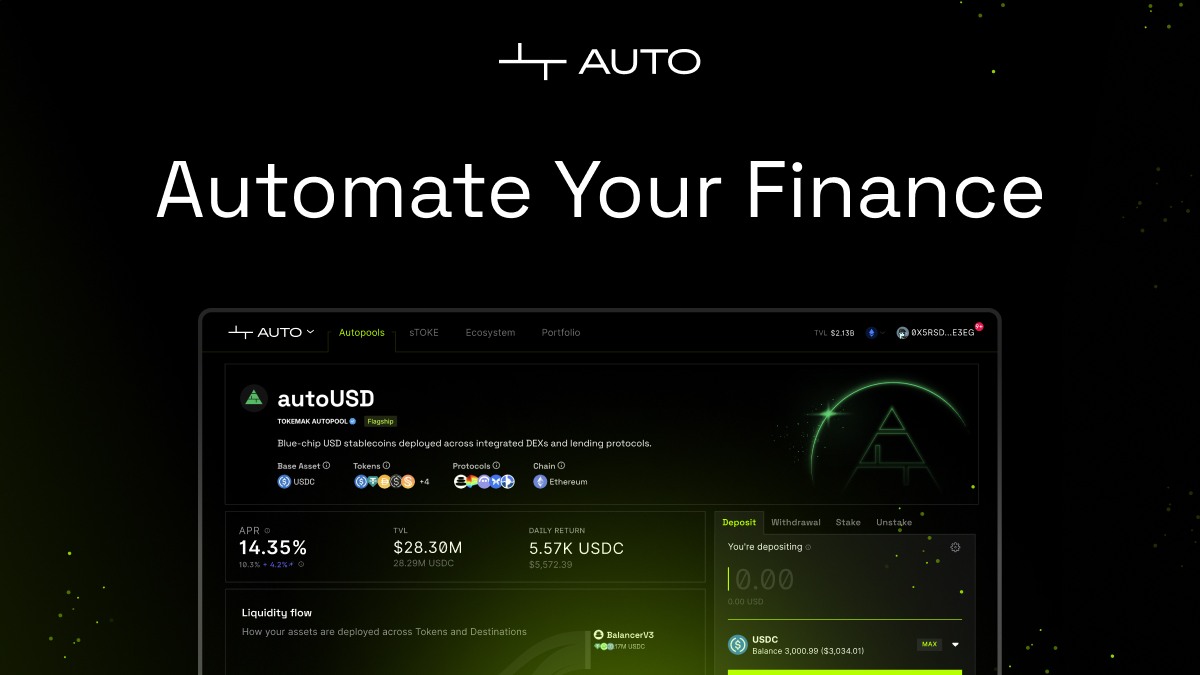
A useful dashboard shows more than a headline return. It should help the user understand deposited assets, current position value, earned fees, rewards, rebalances, and withdrawal availability. Those details explain whether a strategy is earning because the market is active, because incentives are flowing, or because the position has been adjusted into a productive range.
Once a position is live, the best habit is periodic review rather than constant reaction. The user looks for changes in pool volume, asset volatility, reward conditions, and gas costs. Auto finance handles the strategy workflow, while the user remains responsible for choosing exposure that matches their tolerance for DeFi liquidity risk.
Auto finance: questions and answers
- What assets do I need before using an automated LP strategy?
- You need the tokens required by the selected liquidity pair, plus enough native gas token on the relevant network to pay transaction fees. Some strategies require both sides of a pair in specific proportions, while others route deposits through a contract that balances the position. The application flow should show the needed assets before a deposit transaction is signed.
- Does Auto finance pay a fixed APY?
- No. LP returns come from market activity and strategy conditions rather than a fixed coupon. Trading fees rise and fall with pool volume, rewards change when protocols update incentive programs, and impermanent loss affects the final value of the position. A displayed yield is a snapshot or estimate of current strategy performance, not a fixed payment schedule.
- Can I withdraw from a managed liquidity position at any time?
- A withdrawal depends on the strategy contract and the network transaction completing successfully. Many DeFi LP strategies allow user-initiated withdrawals, but the final amount reflects current pool prices, accrued fees, rewards, and any transaction costs. If a strategy is rebalancing or interacting with a protocol at that moment, the interface may require the current transaction state to finish first.
- Which users benefit most from automated liquidity management?
- The best fit is someone who wants exposure to DeFi liquidity pools but does not want to maintain ranges, compare incentives, and rebalance positions manually. It also suits users managing several LP positions where routine upkeep becomes time-consuming. Users who only want to hold a single token or make occasional swaps usually need a simpler wallet or exchange flow.
- What happens if one token in the pool moves sharply?
- A sharp price move changes the composition and value of the LP position. The strategy may rebalance according to its rules, but impermanent loss still affects the economics of the pool. In concentrated liquidity designs, the position may also move outside the active range until adjusted. The final outcome depends on price movement, fees earned, rewards, and rebalancing costs.
- Do I need to keep my wallet connected after depositing?
- No continuous wallet connection is needed for a smart contract strategy to operate after the deposit settles. The wallet is required to approve tokens, deposit, withdraw, and sign any user-initiated actions. Monitoring the dashboard still matters because the user needs visibility into position value, earned fees, rewards, and any changes to strategy status.
- Is an LP strategy the same as staking a token?
- No. Staking usually means locking or delegating one asset for protocol rewards. An LP strategy supplies assets to a liquidity pool so traders can swap against that liquidity, and the provider earns from fees or incentives tied to the pool. The risk profile is different because LP positions respond to price movement between two assets and to pool-level trading activity.